


-
llámanos
+8619906035385 -
Envíanos un correo electrónico
ping@aotbattery.com
llámanos
+8619906035385Envíanos un correo electrónico
ping@aotbattery.com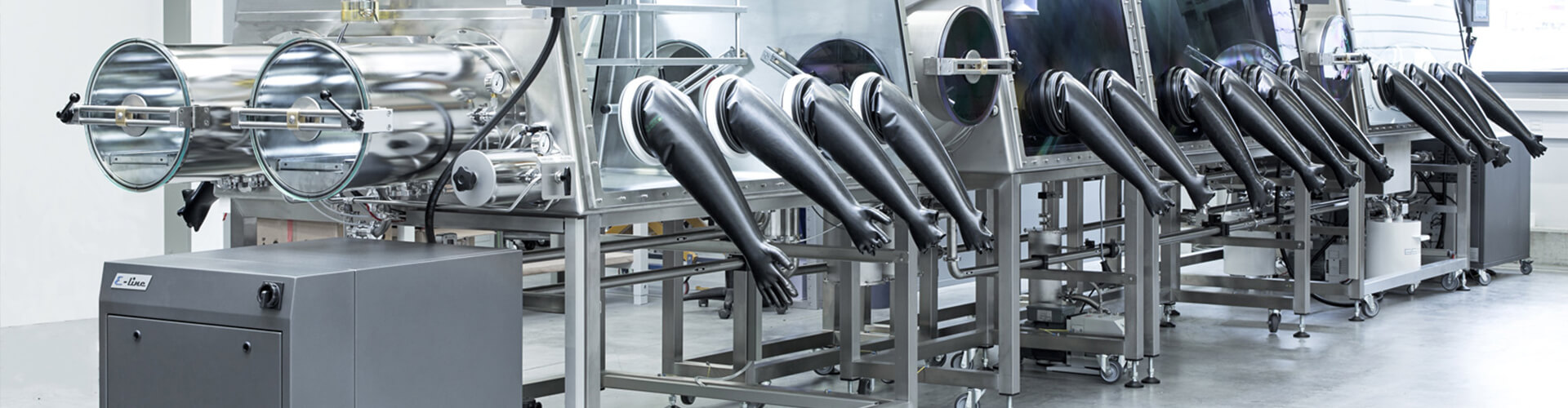
En el dinámico panorama de la investigación y el desarrollo de baterías, lograr una fabricación de electrodos precisa y uniforme es primordial. El rendimiento, la seguridad y la vida útil de las baterías de iones de litio están profundamente influenciados por la calidad de las películas de recubrimiento. En el centro de este proceso crítico se encuentra el aplicador de película, también conocido comúnmente como cuchilla dosificadora. Esta herramienta indispensable sirve como puente entre las suspensiones de materia prima y los electrodos de batería funcionales, lo que permite a los investigadores controlar el espesor, la uniformidad y la adhesión de la película con una precisión excepcional. Comprender los principios de aplicación, los tipos y los matices operativos de
aplicadores de película
Es fundamental para el avance de la tecnología de baterías y para acelerar el paso de la innovación de laboratorio a la realidad comercial.
Principios básicos y mecanismo de funcionamiento
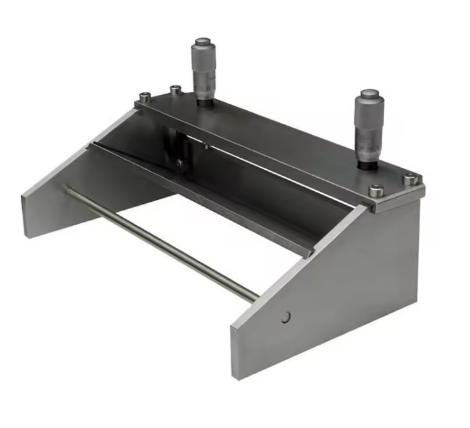
Un aplicador de película funciona según el principio fundamental del recubrimiento por cizallamiento, donde una suspensión viscosa se extiende uniformemente sobre la superficie de un sustrato, generalmente una lámina de cobre o aluminio para ánodos y cátodos, respectivamente. Los componentes principales incluyen una cuchilla mecanizada con precisión, un mecanismo de altura ajustable y una plataforma de soporte estable. A medida que el sustrato se mueve debajo de la cuchilla o la cuchilla se mueve sobre el sustrato, la cuchilla define un espacio preciso, conocido como "ajuste de espacio" o "espesor de la película húmeda". Este espacio determina el espesor del recubrimiento húmedo, que a su vez determina el espesor de la película seca después de la evaporación del disolvente.
El éxito del proceso de recubrimiento depende de varios parámetros clave. La viscosidad de la suspensión es fundamental; debe optimizarse para que fluya suavemente bajo la cuchilla sin causar aglomeración ni atrapamiento de aire. La energía superficial del sustrato, la velocidad de movimiento y el ángulo de la cuchilla dosificadora con respecto al sustrato desempeñan un papel crucial para lograr una película sin defectos. Un ángulo leve (normalmente de 10 a 45 grados) ayuda a alisar la superficie de la suspensión, mientras que una presión excesiva puede provocar vetas o un recubrimiento irregular.
Tipos de aplicadores de película y sus aplicaciones
Los laboratorios de baterías utilizan diversos tipos de aplicadores de película, cada uno adaptado a las necesidades específicas de la investigación, la escala de la experimentación y las limitaciones presupuestarias.
1. Aplicadores manuales de película
Los aplicadores manuales son las herramientas más básicas y económicas, ideales para I+D a pequeña escala, fabricación de prototipos y entornos educativos. Consisten en un dispositivo manual o de sobremesa con una abertura fija o ajustable. Si bien ofrecen simplicidad y flexibilidad, su precisión se ve limitada por la manipulación humana. Son excelentes para pruebas iniciales, selección de materiales y enseñanza de principios básicos de recubrimiento. Sin embargo, lograr resultados consistentes en múltiples muestras puede resultar difícil debido a las variaciones en la presión y la velocidad de aplicación.
2. Aplicadores automáticos de película
Los aplicadores automáticos de película representan el estándar de oro para los laboratorios de baterías modernos. Estos sistemas automatizados cuentan con velocidad programable, ajuste de separación y mecanismos de sujeción del sustrato. Ofrecen una uniformidad y reproducibilidad incomparables, asegurando que cada muestra recubierta sea prácticamente idéntica. Las características clave incluyen controles digitales para la configuración precisa de parámetros, avance automático de la película y, a menudo, calentamiento integrado para un secado controlado. Los aplicadores automáticos son indispensables para la experimentación de alto rendimiento, el control estadístico de procesos y la generación de datos para presentaciones regulatorias o publicaciones revisadas por pares. Reducen significativamente el error humano y son capaces de manejar una amplia gama de suspensiones.
viscosidades
y tamaños de sustrato.
3. Recubridoras de troqueles ranurados (Sistema aplicador avanzado)
Para aplicaciones más sofisticadas, como la deposición de electrodos multicapa, recubrimientos de electrolitos sólidos o investigación de películas delgadas, se emplean recubridoras de ranura. Si bien técnicamente representan una tecnología de recubrimiento más avanzada, funcionan según principios relacionados con la aplicación de películas. En lugar de una cuchilla, un cabezal de ranura deposita la suspensión sobre el sustrato en un flujo controlado, similar a una cortina. Este método ofrece un control superior sobre el espesor de la película, la definición de los bordes y la capacidad de recubrir capas extremadamente delgadas. Las recubridoras de ranura son cruciales para el desarrollo de baterías de próxima generación con arquitecturas complejas, donde la precisión a microescala es fundamental.
Conocimientos clave y mejores prácticas operativas
1. Calibración y mantenimiento de precisión
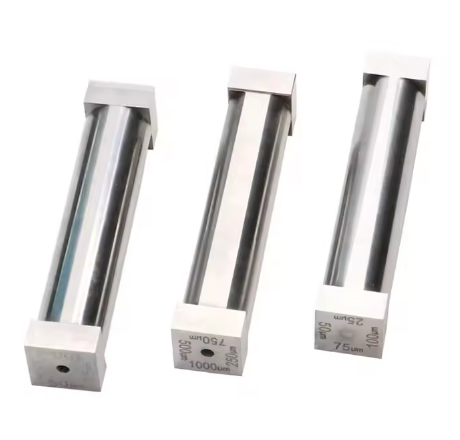
La precisión de un aplicador de película depende directamente de su calibración. Es fundamental revisar periódicamente el ajuste de la separación con calibres de precisión para compensar el desgaste de la cuchilla y los componentes mecánicos. La cuchilla debe mantenerse limpia y libre de residuos secos para evitar rayones o un recubrimiento irregular. Incluso pequeñas muescas o residuos pueden provocar defectos visibles en el electrodo, lo que puede degradar significativamente el rendimiento de la batería.
2. Preparación del sustrato
Antes del recubrimiento, las láminas colectoras de corriente (cobre y aluminio) deben prepararse adecuadamente. Esto generalmente implica una limpieza para eliminar polvo, aceites o cualquier contaminante superficial que pueda dificultar la adhesión. En algunos casos, se aplican tratamientos superficiales como la descarga de corona o el calandrado para mejorar la humectabilidad del sustrato por la suspensión, lo que garantiza una mejor adherencia de la película y reduce el riesgo de deslaminación durante el ciclo.
3. Manejo y optimización de lodos
La suspensión es fundamental para el proceso de recubrimiento. Su formulación —que incluye el material activo, el aglutinante, el aditivo conductor y el disolvente— debe optimizarse reológicamente. Una suspensión demasiado viscosa será difícil de extender y puede provocar que la cuchilla se levante, mientras que una suspensión demasiado líquida carecerá de uniformidad y se descolgará. Realizar pruebas reológicas para determinar la viscosidad ideal y el comportamiento tixotrópico es un paso clave antes de cualquier experimento de recubrimiento. Además, asegurar que la suspensión esté bien mezclada y libre de aglomerados es vital para obtener una película homogénea.
El impacto en el rendimiento de la batería
La calidad del recubrimiento influye directamente en el rendimiento de la batería. Un electrodo uniforme, sin defectos y con un grosor constante garantiza un transporte iónico y electrónico óptimo dentro de la celda. Esto se traduce en una mayor densidad de energía, una mejor capacidad de carga y descarga (la capacidad de la batería para cargarse y descargarse rápidamente) y una mayor vida útil. Por el contrario, un electrodo con un recubrimiento deficiente, capas irregulares o poros, puede provocar puntos calientes localizados, un aumento de la resistencia interna y, en última instancia, riesgos para la seguridad como el sobrecalentamiento.
F
Los aplicadores/extractores de ilm son herramientas fundamentales en los laboratorios de baterías, ya que constituyen la puerta de entrada a materiales de electrodo de alto rendimiento. El dominio de su aplicación, funcionamiento y conocimientos asociados es indispensable para los investigadores que buscan ampliar los límites de la tecnología de baterías. Desde configuraciones manuales de sobremesa hasta sistemas automatizados avanzados, la elección del aplicador depende de los objetivos específicos de la investigación. Siguiendo las mejores prácticas en calibración, preparación de sustratos y gestión de suspensiones, los científicos pueden aprovechar todo el potencial de las nuevas químicas de baterías e impulsar la transición hacia un futuro energético más sostenible.

tel/Whatsapp: +8619906035385


 IPv6 network supported
Scan to wechat: