


-
llámanos
+8619906035385 -
Envíanos un correo electrónico
ping@aotbattery.com
llámanos
+8619906035385Envíanos un correo electrónico
ping@aotbattery.com
1. ¿Qué es un molino de bolas de batería? Análisis de la función principal
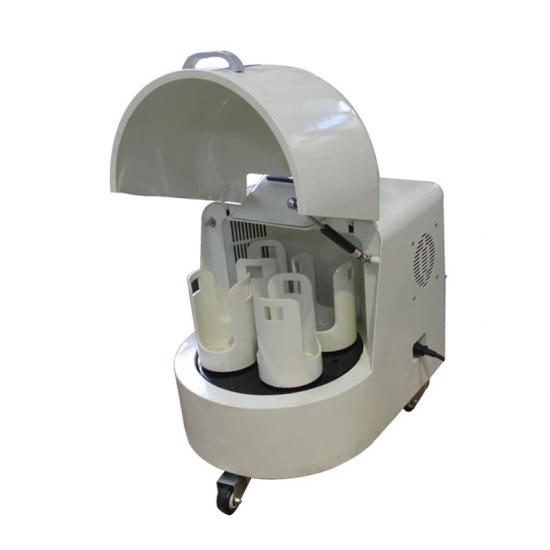
(1) El molino de bolas de batería es un equipo especializado basado en el principio combinado de "impacto - molienda - dispersión", que se utiliza para el procesamiento fino de materiales centrales como materiales de electrodos positivos y negativos, agentes conductores y pastas de baterías de litio. Logra los objetivos de reducción del tamaño de partícula, mezcla homogénea o dispersión uniforme a través de la colisión de alta frecuencia y la acción de cizallamiento de los medios de molienda (como bolas de óxido de circonio, bolas de acero inoxidable, etc.) con los materiales. Es ampliamente aplicable a materiales centrales de baterías de litio como materiales ternarios (NCM), fosfato de hierro y litio ( LFP ), electrodos negativos de silicio-carbono y grafito, y es un eslabón clave en el proceso que conecta las materias primas con los productos de batería terminados. En comparación con los molinos de bolas convencionales, el molino de bolas para baterías tiene tres características exclusivas: ① Gran compatibilidad de materiales, evitando la contaminación por metales (los componentes principales utilizan materiales cerámicos y poliméricos); ② Control preciso de parámetros (la velocidad de rotación, el tiempo, la temperatura, etc., se pueden ajustar en múltiples dimensiones); ③ Adecuado para todo el proceso de producción de baterías (desde la investigación en laboratorio a nivel de kilogramos hasta la producción en fábrica a nivel de toneladas).
(2) Función principal: Cuatro valores clave que determinan el rendimiento de la batería
Optimización del tamaño de partícula: Transforma las materias primas del nivel micrométrico al nivel nanométrico, aumenta la superficie específica de los materiales, mejora la actividad de reacción entre el electrodo y el electrolito, y afecta directamente a la densidad energética de la batería (por ejemplo, después de moler y refinar los electrodos negativos de grafito, la capacidad de la batería puede aumentar entre un 15 % y un 20 %).
Mezcla homogénea: Permite lograr una mezcla uniforme a nivel molecular de las sustancias activas, los agentes conductores y los aglutinantes, evitando desviaciones de concentración locales, asegurando la estabilidad de la transmisión de corriente durante la carga y descarga de la batería y reduciendo la tasa de degradación de la capacidad.
Control de la contaminación: Mediante el uso de tanques y medios de molienda específicos (como ágata y óxido de circonio), evitamos la introducción de impurezas debido al contacto entre los materiales y el metal, lo que garantiza la vida útil de la batería (por cada reducción del 0,1 % en el contenido de impurezas, la vida útil puede prolongarse aproximadamente 50 veces).
Adaptación del proceso: Admite varios modos de molienda, incluidos el seco, el húmedo y el de vacío, y es adecuado para los requisitos de procesamiento de diferentes materiales de baterías (por ejemplo, los ánodos de silicio-carbono necesitan molienda húmeda para evitar la oxidación, y la suspensión de fosfato de hierro y litio necesita molienda al vacío para eliminar las burbujas).
2. Escenarios de aplicación principales: Verificación de las capacidades de los equipos a través de datos.
El molino de bolas para baterías, como equipo clave en toda la cadena de producción de baterías de litio, debe demostrar sus ventajas de rendimiento mediante datos de escenarios específicos:
En el escenario de investigación de laboratorio, el laboratorio de nuevos materiales energéticos de una universidad utilizó un molino de bolas planetario para procesar materiales de electrodo positivo ternario (NCM811). En condiciones de una velocidad de rotación de 400 rpm y un tiempo de molienda de 6 horas, el tamaño de partícula de la materia prima se redujo con éxito de 15 μ de m a 500 nm, con una uniformidad de distribución del tamaño de partícula (valor CV) de ≤ 8%. Esto proporcionó materiales de alta actividad para la posterior preparación de láminas de electrodos, aumentando la vida útil de la batería en un 37%.
En el escenario de producción piloto, una empresa de baterías utilizó un molino de bolas de doble planetario de 5 L para mezclar y dispersar una suspensión de fosfato de hierro y litio. El equipo logró la homogeneización completa de la suspensión mediante un movimiento combinado de "revolución + rotación" (velocidad de revolución de 65 rpm, velocidad de rotación de 170 rpm) en 36 revoluciones. En comparación con los mezcladores tradicionales, la eficiencia se incrementó en 4 veces y la viscosidad de la suspensión se mantuvo estable en 3500 cP. ± 5%, con una tolerancia extrema de espesor de lámina de ≤ ± 0,01 mm. Durante la producción piloto continua de 72 horas, el equipo mantuvo un grado de vacío de -0,09 MPa, sin residuos de burbujas, y el error de consistencia de capacidad de la batería terminada fue inferior al 2 %.
3. Análisis comparativo: La lógica clave para seleccionar el equipo y el proveedor adecuados.
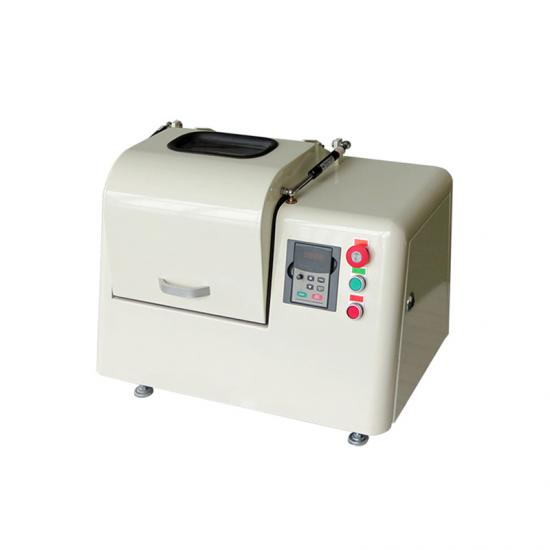
Principales diferencias entre los tipos de molinos de bolas a batería
|
Tipo |
Ventajas principales |
Escenarios aplicables |
Limitaciones |
|
Molino de bolas planetario |
Alto Intensidad de molienda y control preciso del tamaño de partícula |
Investigación y desarrollo en laboratorio, producción piloto a pequeña escala. |
La capacidad de procesamiento de una sola máquina es pequeña ( ≤ 50 L), y no es apto para la producción en masa a gran escala. |
|
Molino de bolas de tipo agitador |
Dispersión y mezcla integradas, con excelente uniformidad de la suspensión. |
Producción a escala piloto, preparación de pasta de electrodos |
La capacidad de procesamiento de una sola máquina es relativamente pequeña ( ≤ 50 litros), y no es adecuado para la producción por lotes a gran escala. |
|
Molino de bolas continuo |
Gran capacidad de procesamiento y alto grado de automatización. |
Producción en masa y reciclaje/renovación |
El equipo tiene un alto costo de inversión y es complejo de mantener. |
|
Molino de bolas vibratorio |
Alta velocidad de molienda y bajo consumo de energía |
Predispersión del agente conductor y producción a pequeña escala |
El nivel de ruido es bastante alto (requiere insonorización). |
4. Preguntas y respuestas frecuentes
(1) ¿Por qué la pulpa producida por el molino de bolas de batería tiende a aglomerarse? Las principales razones se pueden resumir en tres puntos: ① Si el pretratamiento de los materiales es insuficiente, el agente conductor (como el Super P) no se ha dispersado previamente para formar "grumos negros" y se requiere un tratamiento previo ultrasónico; ② Parámetros de equipo incompatibles, la suspensión de alta viscosidad no ha sido equipada con un impulsor de anclaje o la velocidad de rotación es demasiado baja (<300 rpm), lo que resulta en una fuerza de corte insuficiente; ③ Humedad ambiental excesiva, la suspensión del electrodo positivo es propensa a la absorción de agua y aglomeración cuando la humedad es >30%. Solución: Seleccionar equipo que admita la función combinada de "cizallamiento de alta velocidad + dispersión", controlar estrictamente la secuencia de alimentación (solvente → aglutinante → agente conductor → material activo), y mantener la humedad del taller por debajo del 30%.
(2) ¿Cuáles son los componentes clave propensos al desgaste del molino de bolas de batería y cómo se puede extender su vida útil?
Los componentes más propensos al desgaste incluyen principalmente bolas de molienda (bolas de óxido de circonio, bolas de acero inoxidable), paletas rascadoras (de teflón) y juntas. La vida útil de las bolas de molienda depende de la dureza del material procesado. Al trabajar con materiales duros, se recomienda usar bolas de óxido de circonio de 5 a 10 mm de diámetro para evitar la fragmentación causada por un tamaño demasiado pequeño; las paletas rascadoras deben revisarse periódicamente para detectar desgaste. Si el desgaste supera el 30 %, deben reemplazarse a tiempo para evitar la formación de zonas muertas de mezcla; las juntas deben mantenerse limpias para prevenir la corrosión causada por la pulpa residual. Se recomienda reemplazar la junta de sellado al vacío cada 6 meses. Además, durante el funcionamiento, es necesario evitar el funcionamiento en vacío y limpiar regularmente los residuos de las paredes del reactor, lo que puede prolongar la vida útil del equipo en más de un 30 %.
(3) ¿Cuáles son las diferencias en la selección de molinos de bolas de batería para uso en laboratorio y uso en producción?
El equipo de laboratorio debe priorizar la precisión (rango de control del tamaño de partícula, capacidad de ajuste de parámetros) y la flexibilidad (compatibilidad con diversos materiales, conmutación entre procesamiento en seco y en húmedo). Se recomienda elegir un molino de bolas planetario con un volumen de 1 a 5 L, equipado con tanques de molienda de diversos materiales (circonia, ágata, poliuretano) para adaptarse a diferentes materiales. El equipo de producción debe centrarse en la capacidad de producción (capacidad de procesamiento, capacidad de operación continua) y la estabilidad (consumo de energía, tasa de fallas). Durante la etapa de producción piloto, se puede seleccionar un molino de bolas agitado de 5 a 50 L, y en la etapa de producción en masa, se recomienda un equipo planetario continuo o de gran escala, equipado con un sistema de alimentación automatizado.

tel/Whatsapp: +8619906035385


 IPv6 network supported
Scan to wechat: